finding the Fairtale 3rd Prize Winner: “Canary”
by Liam Hogan
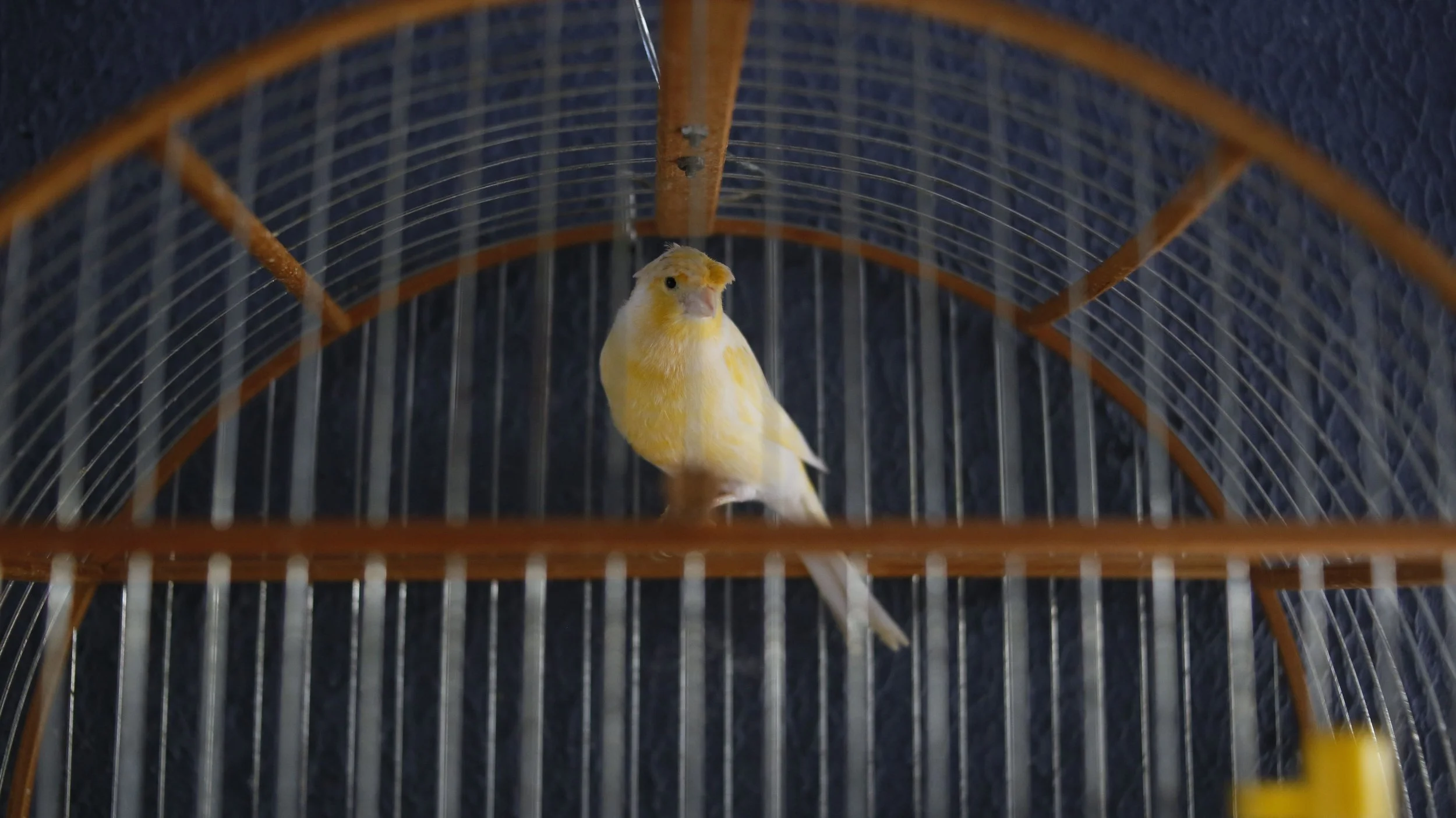
Image by Vidal Balielo Jr.
How do you make yourself heard when you have no voice? This reimagined tale of Rapuntzel tells us how to win without one. Liam’s story is one of resilience and self-determination, which shows us evil can deceive many, that princes are sometimes the ones who need saving, and that one does not need a voice to be heard. A beautifully written story that we hope inspires readers to never be afraid to rewrite the roles others have written for them.
The Fairtales editors’ team
The always-locked door creaked ajar. Out of the darkness a pair of hateful eyes peered from a wizened face, travelling up and down in cold appraisal. Then, with a pinch of her thin lips and a shake of her snake-haired head, the witch withdrew and the door was rebolted.
It would be another three years before it opened again.
#
My heart pounded, my hands trembled anew, but I hid them as I stood in the dead centre of the only room I had ever known, waiting to be inspected, hoping desperately for...something.
This time the stooped crone entered, feet skittering across the stone floor like the claws of a wild animal, some dread of the night. My skin crawled when she disappeared behind me, but as I turned I felt the jab of a sharp nail at my neck. “Stand still, girl!”
I closed my eyes, barely daring to breath as my hair was roughly teased from the bunches in which it was held--by necessity, for it had never been cut and was always in the way. I heard the witch count as she measured its length. How I longed for a pair of shears!
“You'll do,” she grunted, coming back round, still holding my undone braids in heavy loops that filled her bony arms.
“For what?” I asked.
“For whatever I tell you, girl!” she snapped. A smile snuck across her wrinkled face.
“For bait.”
I was smart enough not to risk a second question.
“Sixteen feet,” she mused. “A foot per year. Almost as long as the last one, damn her silly, fragile neck! And damn such fat princes. Well, that's why I keep a spare. So, spare: let’s hear you sing.”
I sang.
“Ye gods! Another squawker,” she winced after only a couple of nervous notes, tapping my lips with that long finger of hers. The sound turned to ash in my throat. I tried to say something--anything. Nothing escaped but the faintest of croaks, softer even than the wind.
“Much better.” She pottered from the room while I was pawing at my neck and returned carrying a birdcage, in which perched a yellow canary.
“Now, girl, sit on the windowsill and let your hair dangle over the edge. I'll do the rest.” She stuck her taloned claw into the cage, waggled it menacingly. The little bird took to a higher perch in alarm, and from there began to sing.
It almost made me forget I'd been struck mute. I'm not sure how long I listened for, perhaps an hour, perhaps most of the afternoon. Never did the magical song repeat, never did it cease. Time passed in a blissful daze until over the enchanting music I heard a rude voice holler from below. A male voice.
“Well, show yourself,” the crone commanded, waggling the canary back into silence.
I stuck my head over the side, peering to the base of the tower, saw a chisel-chinned Prince standing between thorned bushes, peering upward. I pointed to my muted throat, but was dragged sharply away. “That's enough,” the witch hissed, “he's seen the goods.”
And then she called down. “Oh, Prince!” she cried, her voice young and innocent and wistful and mine, “I'm trapped here, all alone. Use my hair to climb up and rescue me, if you dare.”
“Won't that hurt?” he protested from below. “Do you not have a rope, instead of your beautiful hair?” “Alas no... but perhaps, if you leave behind your armour, and your sword? To lighten the load?”
I heard the young fool strip himself of his weapons, his defences, and then I felt sudden dizzying weight as he began to climb. I would have yelped, had I voice. Above me, the crone's eyes dancing with hungry anticipation, her dagger-like talon quivering in readiness. I couldn't call out. I couldn't move my head, or my neck.
But my hands were free.
I lunged for the witch's bony arm, pulled the claw in a slash across my golden tresses, felt sudden release as I flew backwards, heard the Prince's yelp as he tumbled. The crone howled and peered over the sill at her lost quarry.
It was the work of a moment to take a loop of my cut hair, to wrap it tight around her scrawny throat, to pull...
By the time I descended the tower the Prince was gone, despite his earlier protestations of undying love. Nursing his scratches perhaps, or driven away by fear and shame, thinking he had yanked the hair clean out of my head.
Though I was no longer trapped I was alone; friendless, and voiceless. I began to wonder if I had done the right thing. What if the crone was the only one who could return my stolen voice? The outside was a big, scary unknown. I turned back to the tower, went through its stout wooden door.
After checking I was the only spare, after searching to see if the crone had a book of magic (though how could I have read a spell, without voice to shape the words?), after over- turning everything in search of coin, in search of any item of value, I left for the second and final time.
But I wasn't concerned about my future. I knew I could forge my own way, that I would never want for food or lodging. I was no longer without a voice. I carried a cage.
And in it did I not take with me the most marvellous and enchanting songbird in the whole wide world?
END
Liam Hogan is an award-winning speculative short story writer, with stories in Best of British Science Fiction and in Best of British Fantasy (NewCon Press). He volunteers at the creative writing charities Ministry of Stories, and Spark Young Writers. Details http://happyendingnotguaranteed.blogspot.co.uk